
AI agent checkout is becoming a new bottleneck in agentic commerce. A retailer can spend enormous time on structured data, product feeds, AI visibility, UCP, or commerce integrations just to get its products to show up in ChatGPT and Gemini. But none of that optimization means much if an agent fails to complete the transaction because checkout, inventory, or the refund system isn't ready to handle machine behavior.
This problem is covered in a Search Engine Journal article on the checkout challenge in agentic commerce. Greg Jarboe interviews Konstantin Klyagin, founder of QAwerk, to look at what happens after a product has already been successfully discovered by an AI platform.
The conclusion is simple but important: visibility is an upstream problem. Transaction completion is a downstream problem. An AI agent needs every API, feed, inventory state, checkout rule, and order status to stay consistent, because software has no human intuition to "work around" a mismatch that shows up mid-transaction.
Table of Contents
- Why Is Checkout Becoming Such a Big Problem in Agentic Commerce?
- How Fast Is Agentic Commerce Growing?
- Does ChatGPT Still Complete Checkout Natively?
- Why Is an AI Agent Different From a Human Shopper?
- Why Can Rate Limiting Block a Legitimate Shopping Agent?
- Why Can Session Logic Fail?
- Has QAwerk Found a Checkout Failure Genuinely Caused by an AI Agent?
- What Data Problem Did QAwerk Find as an Example?
- Why Is Duplicate Product Data More Dangerous for an Agent?
- Why Does a Single Source of Truth Matter So Much?
- What's the Failure Pattern Expected to Show Up Most Often?
- Why Is Inventory Consistency So Critical?
- What Is Idempotency, and Why Does It Matter?
- Why Does Retrying Happen More Often With an AI Agent?
- Why Does Refund Become Part of Agentic Commerce?
- What's the Partial-Failure Problem With Refunds?
- What Three Tests Are Recommended Before Chasing a New Protocol?
- 1. Load-Test the Checkout API the Way an Agent Would Use It
- 2. Audit Product Data the Way a Machine Reads It
- 3. Test the Refund and Return Flow
- Why Do These Tests Matter More Than a Fourth Protocol?
- What's the Difference Between AI Visibility and Agentic Conversion?
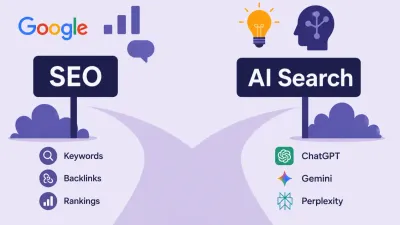
- Why Can't SEO Alone Solve This Problem?
- Which Teams Need to Be Involved?
- How Is QA for an AI Agent Different From Human QA?
- Does This Look Like the Mobile QA Shift From Before?
- What Is "Agent Experience"?
- Why Does a Structured Error Matter?
- What's the Connection to UCP?
- What's the Connection to ACP?
- What Does an Agentic Commerce Readiness Checklist Look Like?
- What New Metrics Need to Be Tracked?
- What Shouldn't Be Concluded From This Article?
- FAQ About AI Agent Checkout
- Why can an AI agent fail at a checkout that works fine for humans?
- What's the riskiest failure?
- Has QAwerk found a production case proven to be caused by an AI agent?
- What are the three most important tests?
- Does UCP solve the checkout problem?
- What is idempotency?
- Conclusion
Why Is Checkout Becoming Such a Big Problem in Agentic Commerce?
Because an AI agent shops with a completely different pattern than a human.
Humans typically:
- browse at an inconsistent pace;
- open many pages;
- abandon a cart;
- come back hours later;
- tolerate small errors;
- try again if something looks off.
An AI agent is far more structured. It can fire off a series of requests in a short window, compare product conditions, pick a variant, and try to complete a transaction within seconds.
In e-commerce, a lot of checkout systems are built on the assumption that a human sits behind the browser. Agentic commerce is starting to test that assumption.
How Fast Is Agentic Commerce Growing?
Search Engine Journal cites Shopify President Harley Finkelstein, who says orders coming through AI-powered search have grown roughly 15x since January 2025.
SEJ also notes commerce is now moving through several new protocols and platforms, such as:
- Google's Universal Commerce Protocol, or UCP;
- OpenAI's Agentic Commerce Protocol, or ACP;
- Salesforce Agentforce Commerce.
Salesforce chose to align Agentforce Commerce with UCP, rather than building an entirely separate standard.
That growth figure shows agentic commerce volume is starting to climb, but it doesn't answer whether e-commerce infrastructure is actually ready to handle machine-speed traffic.
Does ChatGPT Still Complete Checkout Natively?
According to the SEJ article, OpenAI previously brought Etsy sellers and Shopify merchants like Glossier, Spanx, and Vuori into a shopping experience inside ChatGPT.
But OpenAI later pulled back native in-chat checkout and moved the purchase process to retailer apps.
That change actually makes retailer checkout quality even more important.
The flow becomes:
ChatGPT
   ↓
Product discovery
   ↓
Merchant / retailer app
   ↓
Checkout
   ↓
Order
AI can help pick the product, but the merchant still has to provide transaction infrastructure that can actually complete the purchase.
Why Is an AI Agent Different From a Human Shopper?
The biggest difference is speed and predictability.
An agent can:
- send requests very quickly;
- make several sequential API calls;
- run automatic retries;
- close a session and come back later;
- compare state programmatically.
This kind of behavior can look suspicious to a system designed around a human.
Why Can Rate Limiting Block a Legitimate Shopping Agent?
Rate limiting is designed to prevent abuse or excessive requests.
Bot detection also often looks for patterns like:
- very fast requests;
- non-human interaction;
- navigation that's too systematic;
- high request volume.
The problem is, a legitimate AI shopping agent can look exactly like that pattern.
If the policy is too aggressive:
Legitimate agent
→ flagged as a malicious bot
→ throttled / blocked
→ checkout fails
A retailer needs to tell legitimate automation apart from malicious traffic without opening the system too wide.
Why Can Session Logic Fail?
Many e-commerce systems assume one continuous human session.
An agent can behave differently.
Example:
Agent:
1. Query product
2. Save the result
3. Session ends
4. Come back later
5. Continue to checkout
If checkout state relies too heavily on the old session, the agent can discover the cart, price, or selected variant no longer matches.
This kind of problem isn't entirely new, but an agent makes it get exposed far more often.
Has QAwerk Found a Checkout Failure Genuinely Caused by an AI Agent?
Not yet, based on the SEJ interview.
Konstantin Klyagin says his team hasn't seen a verified production incident where an AI agent itself could be proven as the cause of a client's checkout failure.
He also doesn't want to take an ordinary e-commerce bug and label it an "AI agent failure."
This is an important boundary in the source.
The article discusses failure patterns that could become a serious problem in agentic commerce, not documentation of one already-proven major production incident.
What Data Problem Did QAwerk Find as an Example?
On one client project called Pridefit, the engineering team found two different components each keeping their own copy of the same plan data.
The problem was that both sources had slight differences in:
- pricing;
- attributes;
- plan information.
For a human, a mismatch like this might just look like a page that needs a refresh.
For an AI agent, two inconsistent sources can stop the transaction cold.
Why Is Duplicate Product Data More Dangerous for an Agent?
Imagine an agent picks a plan based on Source A.
Source A:
Plan Pro = $99
When checkout starts, System B says:
Source B:
Plan Pro = $109
The agent now faces a conflict.
With no visual context or human judgment, it has no way to know whether:
- the price changed;
- the data is wrong;
- it's actually a different plan;
- checkout is simply outdated.
On the Pridefit project, QAwerk's fix was removing the duplication and centralizing plan data into a single source.
Why Does a Single Source of Truth Matter So Much?
Agentic commerce needs state consistency.
Ideally:
Product Feed
=
Product API
=
Product Page
=
Inventory
=
Checkout
=
Order State
If any one layer says something different, an AI agent can end up at a dead end.
This makes data architecture a direct part of conversion infrastructure.
What's the Failure Pattern Expected to Show Up Most Often?
According to Klyagin, the main problem probably isn't an agent picking the wrong product.
The more common problem is systems disagreeing about the transaction's state.
For example:
- the inventory feed says an item is available but checkout says it's sold out;
- a request times out and the retry hits a non-idempotent endpoint;
- a refund succeeds at the merchant but the new status never makes it back to the agent;
- the price differs between the catalog and checkout;
- a SKU changes at one layer but not yet at another.
Why Is Inventory Consistency So Critical?
Availability is one of the main decision variables for a shopping agent.
If the catalog says:
Variant A = In Stockbut checkout responds:
Variant A = Sold Outthe agent has to decide whether it needs to:
- retry;
- choose a different variant;
- repeat the search;
- stop the transaction.
The less ambiguity there is, the easier it is for an agent to complete the task.
What Is Idempotency, and Why Does It Matter?
Idempotency makes sure a request can be repeated without creating a duplicate transaction or an unwanted extra side effect.
Example:
Agent:
POST /create-order
→ timeout

The agent doesn't know whether the order succeeded.
→ retry
If the endpoint isn't idempotent:
Order 1 gets created
+
Order 2 gets created
If idempotency is designed correctly, the second retry returns the same transaction result without creating a new order.
Why Does Retrying Happen More Often With an AI Agent?
An agent is usually designed for automatic recovery.
When a request fails, it can try again without waiting for the user.
That makes reliability patterns like:
- an idempotency key;
- a retry limit;
- backoff;
- transaction-status lookup;
- duplicate prevention.
even more important.
Why Does Refund Become Part of Agentic Commerce?
Commerce isn't finished once payment succeeds.
The lifecycle includes:
Purchase
→ Fulfillment
→ Delivery
→ Return
→ Refund
If an agent completes a purchase on a user's behalf, it can also be asked to help manage a return or a refund.
Because of that, post-purchase state has to be machine-readable and reliable.
What's the Partial-Failure Problem With Refunds?
For example:
Merchant:
refund succeeded

Payment provider:
status updated

Agent:
still sees "processing"
A human can just call customer service.
An agent needs a status it can trust and a clear recovery mechanism.
SEJ stresses the need to make sure refunds and returns complete correctly on the first attempt and that the state stays in sync.
What Three Tests Are Recommended Before Chasing a New Protocol?
Klyagin recommends three main checks.
1. Load-Test the Checkout API the Way an Agent Would Use It
Don't just test one human-like session.
Test parallel calls in a short window to see:
- rate limits;
- latency;
- timeouts;
- locking;
- session behavior;
- retry safety.
2. Audit Product Data the Way a Machine Reads It
Don't just look at the browser output.
Compare data across:
- the product feed;
- the API;
- structured data;
- the database;
- the checkout service;
- the inventory system.
3. Test the Refund and Return Flow
Make sure:
- the request succeeds;
- the status stays consistent;
- the payment update gets received;
- the agent gets final confirmation.
Why Do These Tests Matter More Than a Fourth Protocol?
Because every commerce protocol depends on the same underlying foundation.
UCP, ACP, or any other commerce platform can't fix a checkout endpoint that fails to handle a retry, or an inventory system that returns inconsistent data.
A protocol is just the interface.
The underlying commerce system still has to be correct.
What's the Difference Between AI Visibility and Agentic Conversion?
Area | Question |
|---|---|
AI Visibility | Does the agent discover and recommend the product? |
Agentic Conversion | Can the agent actually complete the transaction? |
SEO and AI visibility sit in the first part.
Engineering, checkout QA, payments, inventory, and the order lifecycle determine the second part.
Why Can't SEO Alone Solve This Problem?
Technical SEO can help with:
- product discovery;
- structured data;
- crawlability;
- AI retrieval;
- catalog clarity.
But SEO doesn't govern:
- transaction isolation;
- payment retries;
- inventory locking;
- refund reconciliation;
- API idempotency.
Agentic commerce needs cross-functional collaboration.
Which Teams Need to Be Involved?
A more realistic operating model:
SEO / AI Visibility
        ↓
Product Data
        ↓
Commerce Engineering
        ↓
Payments
        ↓
QA
        ↓
Security
        ↓
Customer Operations
Each team owns a different part of the customer journey.
How Is QA for an AI Agent Different From Human QA?
Traditional QA usually focuses on the human shopper's experience.
Agentic QA needs to test:
- machine-speed requests;
- API consistency;
- rapid retries;
- session discontinuity;
- structured responses;
- status propagation;
- error recoverability.
Klyagin expects e-commerce QA to grow into two separate tracks:
Human Experience QA
+
Agent Experience QA
Does This Look Like the Mobile QA Shift From Before?
SEJ compares this shift to the period when companies started building mobile-specific test suites roughly a decade ago.
A website that worked well on desktop didn't automatically deliver a good experience on mobile.
With a similar pattern:
Checkout that works for humans
≠
checkout that's ready for an agent
Both run on the same backend, but the client behavior is completely different.
What Is "Agent Experience"?
Agent experience is the quality of interaction available to a software agent when using a service.
Aspects worth paying attention to include:
- data clarity;
- a stable schema;
- predictable status;
- safe retries;
- structured errors;
- explicit permissions;
- consistent transaction state.
It's similar to human UX, except the interface is the protocol and the API.
Why Does a Structured Error Matter?
A human shopper can read:
"Sorry, something went wrong. Please try again."An agent needs far more deterministic information.
Example:
{
  "code": "OUT_OF_STOCK",
  "sku": "ABC-123",
  "retryable": false
}
With an error like this, the agent can choose the right branch to follow.
What's the Connection to UCP?
The Universal Commerce Protocol helps make commerce interactions more standardized.
But the SEJ article stresses that a protocol doesn't fix the underlying QA problem.
UCP can define how an agent and a merchant communicate, but the merchant still has to make sure:
- the data is correct;
- checkout is stable;
- payment stays consistent;
- status is reliable.
What's the Connection to ACP?
OpenAI's Agentic Commerce Protocol is also an interface layer for commerce.
Just like UCP, transaction success still depends on the underlying systems.
If inventory and checkout are inconsistent, a protocol can't create correctness automatically.
If your team has previously covered UCP, WebMCP, or agentic commerce, the internal article AI Preference Differs by Generation: Why Is Claude So Strong With Gen Z? can serve as an internal link once the previous article's URL is verified.
What Does an Agentic Commerce Readiness Checklist Look Like?
Area | What to Test |
|---|---|
Catalog | SKU, price, variant, and availability all consistent |
Checkout | Load, rate limits, session, concurrency |
Payment | Retry, idempotency, duplicate prevention |
Inventory | Real-time state and reservation |
Order | Status propagation |
Refund | Completion and synchronization |
Agent | Structured errors and a recovery path |
What New Metrics Need to Be Tracked?
Don't stop at AI citations or product impressions.
Agentic commerce needs a more complete funnel:
AI Impression
→ Recommendation
→ Product Selection
→ Cart Creation
→ Checkout Start
→ Payment Success
→ Order Confirmed
→ Fulfillment
Additional metrics:
- agent checkout success rate;
- agent retry rate;
- inventory conflict rate;
- duplicate transaction rate;
- refund reconciliation time;
- API error rate.
What Shouldn't Be Concluded From This Article?
- There's no verified production failure yet that QAwerk can prove was caused by an AI agent.
- Not every human-ready checkout will necessarily fail for an agent.
- A 15x growth figure doesn't mean 15x of all e-commerce orders come from AI.
- A new protocol doesn't automatically make checkout safe.
- AI visibility doesn't guarantee conversion.
FAQ About AI Agent Checkout
Why can an AI agent fail at a checkout that works fine for humans?
Because an agent can move faster, send structured requests, retry automatically, and depend on state data that has to stay consistent across every layer.
What's the riskiest failure?
Out-of-sync product data, inventory conflicts, a timeout hitting a non-idempotent endpoint, a session mismatch, and a refund status that never makes it back to the agent.
Has QAwerk found a production case proven to be caused by an AI agent?
Not yet, based on the SEJ interview. The source explicitly states his team hasn't seen a verified production incident like that.
What are the three most important tests?
Load-test the checkout API with machine-like traffic, audit product data from a machine's perspective, and verify that returns/refunds complete with a consistent state.
Does UCP solve the checkout problem?
Not automatically. UCP standardizes commerce interaction, but correctness still depends on the merchant's own inventory, checkout, payment, and order infrastructure.
What is idempotency?
Idempotency makes sure a retried request doesn't create a duplicate transaction or an unwanted side effect.
Conclusion
AI agent checkout shows that agentic commerce doesn't stop at visibility. A product can be discovered by ChatGPT, Gemini, or another AI platform and still fail to generate revenue if the checkout infrastructure can't handle machine-speed behavior.
Search Engine Journal highlights several failure patterns worth anticipating: duplicated product data, inventory mismatches, session logic that's too human-centric, retries hitting non-idempotent endpoints, and refund or order state that falls out of sync.
It's important not to overstate the evidence. QAwerk hasn't yet seen a verified production incident it can prove was caused by an AI agent itself. Their findings mainly point to e-commerce infrastructure weaknesses that become riskier once software starts acting as the buyer.
Because of that, a retailer shouldn't just chase UCP, ACP, or the next new AI platform. The priority is making sure the catalog, checkout, payment, inventory, refund, and order state all run on one source of truth with predictable behavior.
If your business wants to prepare its e-commerce for AI agents, agentic commerce, UCP/ACP integration, a checkout API, or QA automation for a generative AI workflow, you can discuss your business's technology needs with our technical team.


Comments
Got a question or feedback? Leave a comment!