
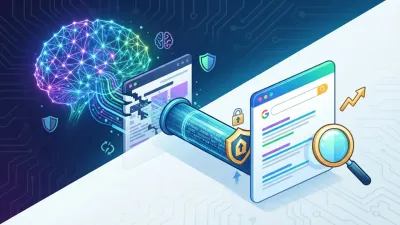
Gemini AI agent is increasingly the main direction of Google DeepMind's development. Gemini is no longer positioned as just a chatbot that answers questions, but as a system that can understand intent, use tools, work with functions, and take action alongside a user to complete a task.
This shift is covered in a Search Engine Journal article on Gemini's evolution from chatbot to AI agent. The article summarizes an interview with Koray Kavukcuoglu, SVP and Chief AI Architect at Google DeepMind, who says Google increasingly sees Gemini as an agent — something far broader than just a language model or a chatbot.
According to Kavukcuoglu, coding has become one of the key gateways into this shift. From coding, Google learned about software engineering, tool use, function use, and agentic workflows. The next focus isn't just making a model better at answering questions — it's building a system capable of taking action on a human's behalf and alongside them.
Table of Contents
- What's the Difference Between a Chatbot and an AI Agent?
- Why Has Coding Become the Gateway to Agentic AI?
- What Did Google Learn From Software Engineering?
- What Changes When You Go From Model to Agent?
- What Does Google Mean by "Agentic Workflow"?
- What's Changing With Gemini 3.5?
- What Is Computer Use?
- What's the Difference Between Computer Use and Tool Calling?
- Why Does Google Emphasize Intent and Ambiguity?
- Why Does Intelligence Remain the Priority?
- Is Agentic AI Changing Google Search?
- How Can an AI Agent Change the Search Journey?
- What's the Impact on Websites?
- What's the Connection to WebMCP and UCP?
- What's the Impact on Developers?
- Why Does Idempotency Matter for an AI Agent?
- What's the Risk of AI Becoming More Agentic?
- What Is Human-in-the-Loop in an Agentic Workflow?
- When Can an Agent Be More Autonomous?
- What's the Impact on Businesses?
- What's the Impact on the Customer Journey?
- Will AI Agents Replace Every App?
- What Should a Product Team Prepare?
- Does Every Product Need an Agent Right Now?
- What's the Implication for Generative AI Strategy?
- FAQ About Gemini AI Agent
- Does Google really consider Gemini an AI agent?
- What's driving Gemini's shift toward an agent?
- Can Gemini already use a computer?
- Is agentic AI only for coding?
- What's the biggest risk with an AI agent?
- Is a Gemini agent replacing Google Search?
- Conclusion
What's the Difference Between a Chatbot and an AI Agent?
A chatbot mainly responds to input with an answer. An AI agent goes further: it can understand a goal, plan its steps, use tools, maintain context, and execute an action to help complete a piece of work.
In an intelligent agent, the system doesn't just produce information — it acts based on an objective and the environment available to it.
Aspect | Chatbot | AI Agent |
|---|---|---|
Main goal | Answer | Complete the task |
Tool use | Limited or optional | A core part of the workflow |
Planning | Minimal | Multi-step |
Action | Usually not | Can take action |
Environment | Conversation | Browser, app, file, API, computer |
This shift changes what people expect from AI. A user no longer just asks "what should I do?" — they're starting to ask "please do this for me."
Why Has Coding Become the Gateway to Agentic AI?
Kavukcuoglu says Google's experience with coding helped it understand how a model works with tools and a software environment.
Coding is a domain well suited to training agentic ability, since its tasks often need several stages:
- reading the repository;
- understanding the requirement;
- finding the relevant file;
- changing the code;
- running the test;
- analyzing the error;
- repeating until it succeeds.
A workflow like this is different from answering a single static question.
A model has to understand the environment's state, choose a tool, execute the action, read the result, and then decide on the next step.
What Did Google Learn From Software Engineering?
According to the interview SEJ summarizes, Google learned not just "how to build a better coding model," but how to train an agent that can work alongside a human.
Software engineering became an especially important environment because many digital tasks can be represented with a similar pattern:
Understand intent
→ inspect environment
→ choose tool
→ take action
→ evaluate result
→ continue or correct
This pattern can be applied to coding, productivity, browser automation, research, and many other workflows.
What Changes When You Go From Model to Agent?
The main change is that a model is no longer judged only on the quality of its answer, but on its ability to actually deliver an outcome.
In model-centric interaction:
User asks
→ model answers
In agentic interaction:
User sets a goal
→ agent interprets it
→ agent plans
→ agent calls tools
→ agent performs actions
→ agent checks the result
→ agent reports the outcome
This makes reliability, tool selection, permissions, observability, and recovery far more important than they ever were for a traditional chatbot.
What Does Google Mean by "Agentic Workflow"?
An agentic workflow is a chain of work where AI doesn't just produce one output, but carries out several steps to reach a goal.
For example:
User:
"Analyze this week's conversion drop
and summarize the cause."

Agent:
1. Open analytics
2. Compare periods
3. Identify the channel that dropped
4. Check the related campaign
5. Draw a conclusion
6. Put together a recommendation
In a workflow like this, the model has to understand the relationship between steps and adjust its actions based on the previous result.
What's Changing With Gemini 3.5?
Google says Gemini 3.5 has helped it understand agentic actions and agentic workflows more deeply.
In Google's official announcement in June 2026, Gemini 3.5 Flash also gained built-in computer use capability.
With that capability, a developer can build an agent that can interact with a browser, mobile, and desktop environment.
Google names several use cases:
- continuous software testing;
- enterprise automation;
- knowledge work;
- multi-step workflows.
This reinforces DeepMind's statement that Gemini's development direction is becoming increasingly agentic.
What Is Computer Use?
Computer use is a model's ability to look at an interface, understand the screen's state, and then take an action like clicking, typing, choosing a menu, or interacting with an application.
This capability lets an agent work on a system that has no dedicated API.
Example:
Agent
  ↓
Screenshot / UI state
  ↓
Reason
  ↓
Click / type
  ↓
Observe the result
  ↓
Continue
But computer use is usually more fragile than a structured tool call, since the UI can change.
What's the Difference Between Computer Use and Tool Calling?
Aspect | Computer Use | Tool Calling |
|---|---|---|
Interaction | Visual UI | Structured API/tool |
Reliability | More sensitive to UI changes | More deterministic |
Coverage | Can work without an API | Needs the tool to be available |
Example | Clicking a browser button | Calling the searchOrders() function |
A modern agent likely uses both, as needed.
Why Does Google Emphasize Intent and Ambiguity?
Kavukcuoglu says the fundamental building blocks of AI training are still relatively familiar ones, like deep learning, pre-training, reinforcement learning, and optimization.
What's changing far more drastically is the environment where AI operates.
An agent now has to:
- understand a goal that isn't always explicit;
- handle ambiguous instructions;
- collaborate with a human;
- choose a tool;
- decide when it needs to ask;
- decide when it should act.
That problem is far more complex than producing a single answer from a static prompt.
Why Does Intelligence Remain the Priority?
When asked which capability he'd most want to improve if he had a "magic wand," Kavukcuoglu answered that he wants the model to become more intelligent.
His reasoning is simple: a more intelligent model will do almost everything better and more intuitively.
In an agentic context, intelligence shapes:
- planning;
- tool selection;
- error recovery;
- instruction following;
- understanding intent;
- decision quality.
Is Agentic AI Changing Google Search?
Yes, in terms of product direction, but that doesn't mean Search is turning into one fully autonomous agent in a single leap.
Search Engine Journal notes that Google CEO Sundar Pichai has previously called agentic AI the future direction of Search.
At Google I/O 2026, Google also introduced more agentic experiences in Search, including information agents and features that help users complete a task, not just read a result.
That means Gemini's evolution and Search's evolution are moving in tandem.
How Can an AI Agent Change the Search Journey?
Traditional search:
User searches
→ opens links
→ compares
→ acts manually
Agentic search:
User states a goal
→ AI searches
→ compares
→ narrows options
→ executes the action
For example:
"Find a hotel in Tokyo
near a train station
under 2 million rupiah,
pick the one with good reviews,
and help me continue booking it."
In this flow, search and action increasingly merge into one.
What's the Impact on Websites?
A website that used to be just a destination may start becoming an action surface.
An AI agent may need:
- structured product data;
- availability;
- pricing;
- an API;
- booking capability;
- authentication;
- a transaction endpoint;
- a tool interface.
This doesn't mean every website has to build an agent API right away. But for e-commerce, travel, SaaS, and marketplaces, agent compatibility could become a whole new product area.
What's the Connection to WebMCP and UCP?
Gemini's shift toward an agentic workflow lines up with the emergence of protocols like WebMCP and the Universal Commerce Protocol.
WebMCP helps a website expose actions directly to an agent.
UCP helps an agent and a merchant interact within commerce.
Where a website previously only needed to:
be crawlable
→ be understandable
some websites are now also starting to think about how to:
be actionableIf your team has previously covered WebMCP, UCP, or agentic commerce, the internal article PPC Without Opening Google Ads? How AI Agents Are Changing the Ad Workflow can serve as an internal link once the previous article's URL is verified.
What's the Impact on Developers?
Developers will increasingly build applications that have not just a UI for humans, but also a tool interface for an agent.
Some new requirements:
- structured function calling;
- a clear API contract;
- a permission boundary;
- observability;
- agent-specific logging;
- idempotency;
- safe retries;
- human confirmation.
In an agentic system, an error isn't just "a wrong answer." An error can become a wrong action.
Why Does Idempotency Matter for an AI Agent?
An agent can repeat an action when it thinks a request has failed.
If the endpoint isn't idempotent, a single retry can produce:
- two orders;
- two bookings;
- two emails;
- two payments;
- two deletions.
That's why the API an agent uses needs stronger transaction safety than an ordinary manual workflow.
What's the Risk of AI Becoming More Agentic?
The bigger the action capability, the bigger the consequence of an error.
The main risks include:
- misunderstanding intent;
- choosing the wrong tool;
- acting too quickly;
- prompt injection;
- overly broad permissions;
- a hallucinated action plan;
- failing to recover after an error.
Google DeepMind itself published an AI Control Roadmap in June 2026 to address the risk from increasingly capable agents.
This shows agentic capability and safety need to develop together.
What Is Human-in-the-Loop in an Agentic Workflow?
Human-in-the-loop means a human still steps in at certain decision points.
Example:
Agent:
"Hotel A is the best fit.
Total $420.
Cancellation is non-refundable.
Continue booking?"

User:
"Yes."
A sensitive action shouldn't always execute without confirmation.
The threshold depends on the risk.
When Can an Agent Be More Autonomous?
For low-risk tasks, autonomy can be higher.
For example:
- summarizing a document;
- running a test;
- organizing files;
- finding information;
- drafting.
For high-risk tasks like payment, deletion, an account change, or external communication, the guardrail needs to be far stricter.
What's the Impact on Businesses?
A business needs to start asking whether its product is merely "AI-enabled" or genuinely "agent-compatible."
AI-enabled:
We added a chatbot.Agent-compatible:
AI can understand the capability,
take action,
and complete the workflow
with safe permissions.
This distinction will matter more and more as an agent becomes a user's primary interface.
What's the Impact on the Customer Journey?
The customer journey can get much shorter.
Before:
Awareness
→ Search
→ Website
→ Compare
→ Form
→ Checkout
Agentic:
Need
→ Agent
→ Recommendation
→ Action
A brand may earn a conversion without a user ever visiting most of its pages.
This has the potential to reshape analytics, attribution, and UI strategy.
Will AI Agents Replace Every App?
There's no basis yet for a conclusion that big.
Google is talking about AI that helps a user complete a task, not about eliminating every application.
Applications are still needed as:
- the system of record;
- the transaction engine;
- the data store;
- the permission layer;
- business logic;
- the human interface.
An agent is more likely to become an orchestration layer sitting on top of many applications.
What Should a Product Team Prepare?
- Map the critical user journey.
- Identify which actions can be automated.
- Separate read versus write actions.
- Build a permission boundary.
- Add a confirmation gate.
- Add observability.
- Prepare a rollback path.
- Test ambiguity and edge cases.
Does Every Product Need an Agent Right Now?
No.
A simple product with very few actions may not need an agentic interface at all.
An agent is more useful when a workflow has:
- many steps;
- complex context;
- different tools;
- decision points;
- repetitive work.
Don't add an agent just because it's trending.
What's the Implication for Generative AI Strategy?
A generative AI strategy needs to move from "how do we use the model?" to "which workflow can an agent complete safely?"
This shifts the priorities:
Chatbot Era | Agent Era |
|---|---|
Prompt quality | Workflow design |
Answer quality | Task completion |
Conversation UX | Action UX |
Response safety | Action safety |
Model accuracy | System reliability |
FAQ About Gemini AI Agent
Does Google really consider Gemini an AI agent?
Yes. Koray Kavukcuoglu of Google DeepMind says the team increasingly sees Gemini as an agent, not just a chatbot or a language model.
What's driving Gemini's shift toward an agent?
According to Kavukcuoglu, coding became an important gateway, since it helped Google understand software engineering, tool use, function use, and agentic workflows.
Can Gemini already use a computer?
Google has added built-in computer use to Gemini 3.5 Flash to help developers build agents that interact with a browser, mobile, and desktop environment.
Is agentic AI only for coding?
No. Coding became one of the important early environments, but the agentic pattern can be applied to research, productivity, commerce, testing, and knowledge work.
What's the biggest risk with an AI agent?
Risk grows once an agent gets permission to take action. Misunderstanding intent, prompt injection, excessive permissions, and irreversible actions are all important areas.
Is a Gemini agent replacing Google Search?
There's no statement saying Gemini will replace Search. Google is actually bringing agentic capability into several products, Search included.
Conclusion
Gemini AI agent shows a new direction for Google DeepMind: AI is no longer optimized just to answer questions, but to help humans get work done.
According to Koray Kavukcuoglu, coding became the gateway to understanding software engineering, tool use, function use, and agentic workflows. From there, development focus is moving toward a system that can understand intent, collaborate with a human, use tools, and take action.
This shift is already visible in Google's own products, including built-in computer use on Gemini 3.5 Flash and agentic experiences in Search and the Gemini app.
For developers and businesses, the implications are significant. Product architecture needs to start considering agent compatibility, permissions, observability, action safety, and structured tool interfaces — not just a chatbot UI.
If your business wants to build an AI agent, workflow automation, tool calling, an agent-friendly application, or a generative AI system that can take action safely, you can discuss your business's technology needs with our technical team.


Comments
Got a question or feedback? Leave a comment!