
Web development is the process of building and maintaining a website — covering all the behind-the-scenes technical work that makes a website actually function, not just look good visually. If you've ever wondered what web development is and why this term keeps coming up whenever website building is discussed, this article is a web development introduction that answers it from the ground up.
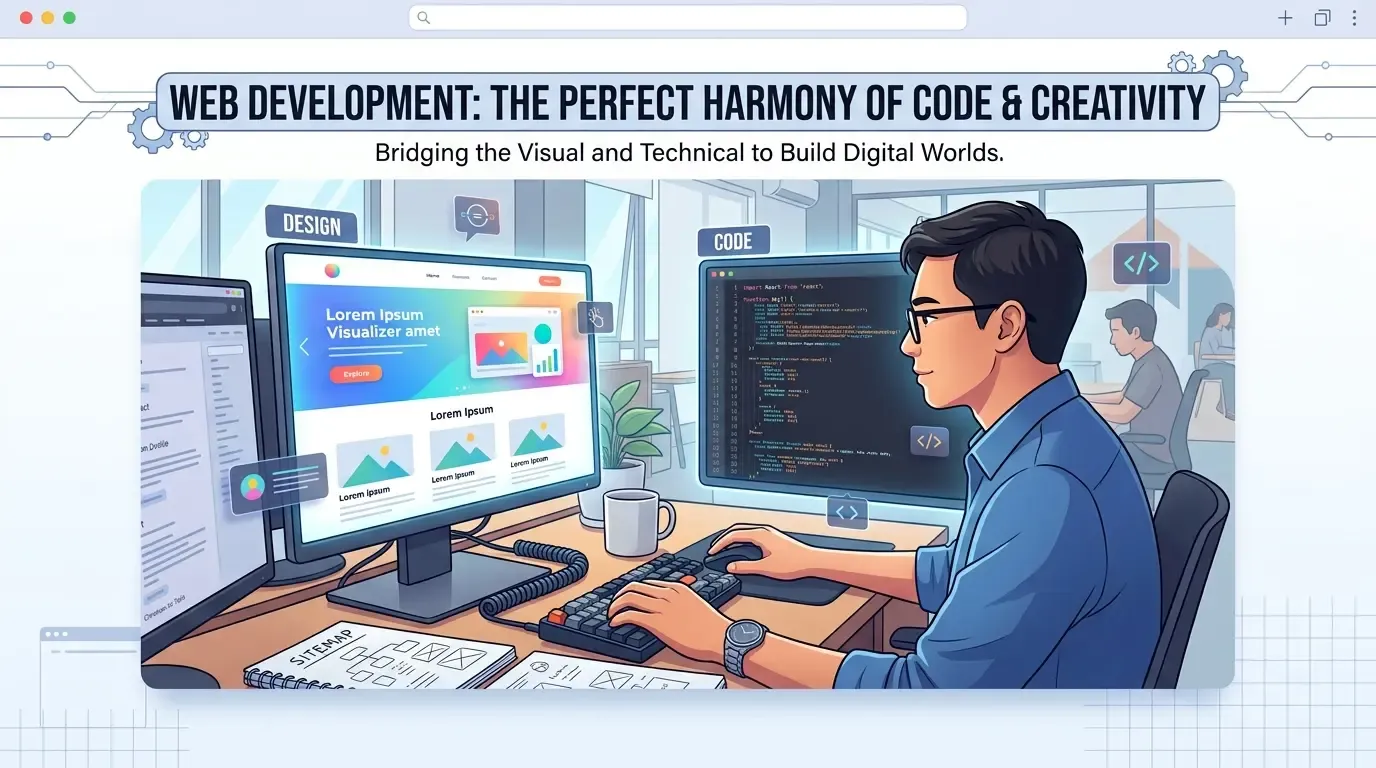
Simply put, web development is the combination of planning, writing code, testing, and maintenance that keeps a website accessible, functioning well, and connected to whatever systems it needs — from a simple database to a complex payment API.
Table of Contents
- Web Development vs. Web Design: What's the Difference?
- The Two Main Sides of Web Development
- Front-End Development
- Back-End Development
- Common Stages in a Web Development Project
- When Does a Business Need Serious Web Development, Not Just a Website Builder?
- Basic Skills Needed
- Popular Web Development Frameworks
- Web Development vs. AI: Is It Still Relevant?
- Need Web Development Help for Your Business?
- Frequently Asked Questions
- Conclusion
Web Development vs. Web Design: What's the Difference?
These two terms are often mixed up, even though they focus on different things.
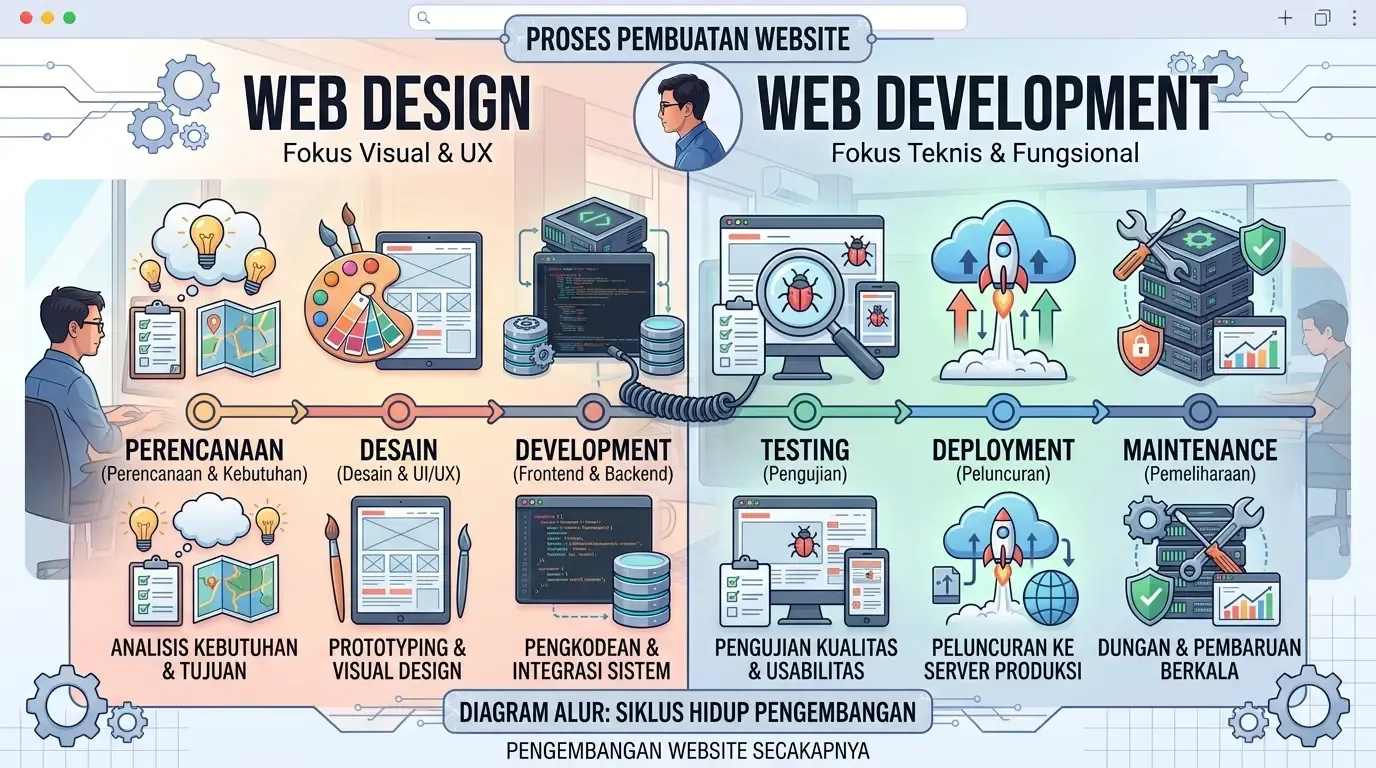
- Web design focuses on appearance — layout, colors, typography, and user experience (UX). It's the "face" of a website.
- Web development focuses on function — how a page actually works, processes data, and connects to other systems like a database or payment API. It's the "engine" behind that face.
In practice, a single website project almost always needs both. A beautifully designed website with broken functionality will frustrate visitors — and the reverse is true too, a website that functions perfectly but looks messy will be hard for visitors to trust. If you want to understand the broader website-building process, including the design side, also read our how to build a website guide, which covers the steps from scratch.
The Two Main Sides of Web Development
Broadly speaking, web development is a field split into two main sides — each with different roles and tools.
Front-End Development
The part users see and interact with directly — buttons, forms, animations, and everything shown on the browser screen. Usually built with HTML, CSS, and JavaScript as its main foundation.
Back-End Development
The part that works on the server — managing data, user authentication, and business logic behind the scenes. Common languages include Python, PHP, Go, or Node.js.
A developer who's skilled at both is often called a full-stack developer — a term that comes up often in job postings in this field. A full-stack developer can work on a project end to end, from what users see to the systems running on the server.
Common Stages in a Web Development Project
Every serious web development project generally goes through these six stages:
- Planning — defining the website's goals, features, and information structure
- Design — creating wireframes/mockups of the look
- Development — writing code for the front-end and back-end
- Testing — making sure every feature works across devices and browsers
- Deployment — publishing the website so it's publicly accessible
- Maintenance — bug fixes and ongoing updates after launch
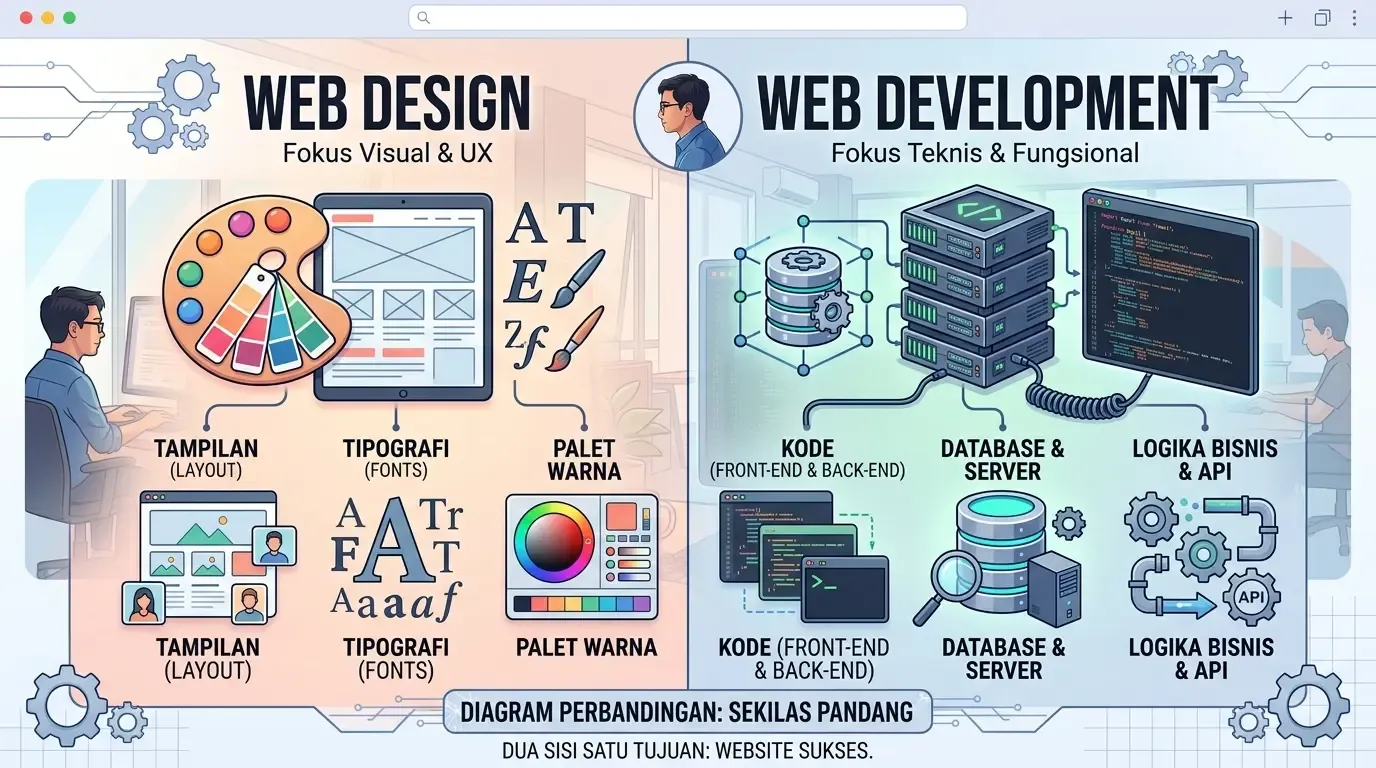
These stages apply to small projects like a company profile website, all the way up to large projects like an online store system with many custom features.
When Does a Business Need Serious Web Development, Not Just a Website Builder?
A website builder is enough for simple static-page needs. But once you need custom features — a booking system, an internal dashboard, third-party API integrations, or high performance for heavy traffic — that's a sign you need a real web development team, not just a drag-and-drop builder.
A few examples of needs that usually go beyond what a website builder can handle:
- Reservation or online booking systems with real-time scheduling
- Internal dashboards for managing customer data or inventory
- Third-party payment, logistics, or CRM API integrations
- Websites with heavy traffic that need custom performance and scalability
- Highly specific features not available in any template
Good web development feels like "nothing at all" to the user — everything just works smoothly without them ever realizing how much is running behind it. This applies across all kinds of websites, from an online store with a seamless checkout system, to a company profile with a contact form that never fails to send.
Basic Skills Needed
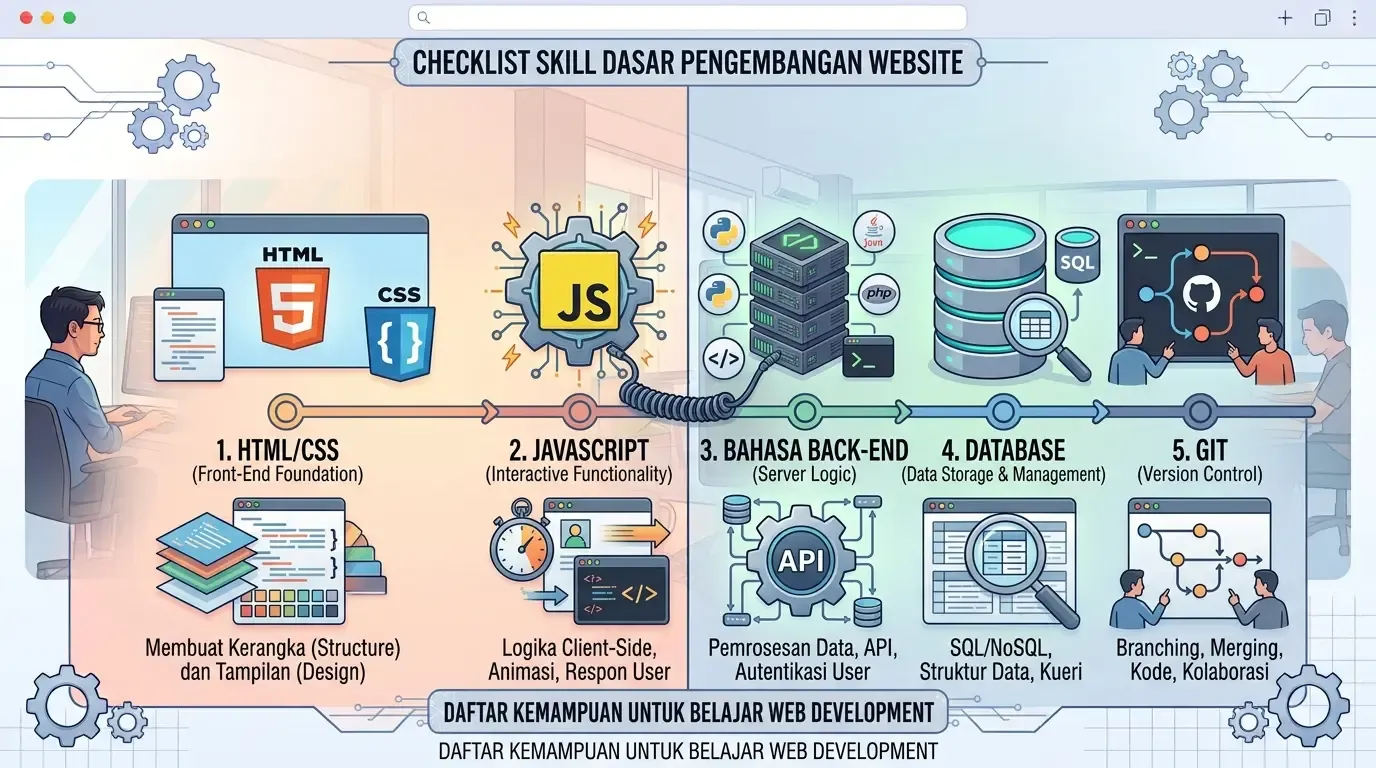
If you're interested in going deeper into this field, here are the foundational skills to master:
- HTML & CSS — the foundation of a web page's structure and appearance
- JavaScript — for interactivity on the user's side
- One back-end language (PHP, Python, Node.js, Go, etc.)
- Basic database understanding (SQL/NoSQL)
- Version control like Git for managing code changes
Beyond the basic skills above, understanding a web development framework also helps speed up the work a lot — instead of writing all the code from scratch, a framework provides ready-made, tested structure and components.
Popular Web Development Frameworks
- Front-end: React, Vue, Astro
- Back-end: Laravel, Django, Express.js
The choice of framework depends on the project's needs and the team's preferences. The right framework can save a significant amount of development time, especially for medium-to-large-scale projects.
Web Development vs. AI: Is It Still Relevant?
With more and more AI tools able to "write code", it's a fair question whether this profession is still needed. The answer: it's very relevant. AI does help speed up part of the coding process — similar to the trend of AI automation for business being adopted more and more across industries — but understanding system architecture, data security, and specific business needs still requires humans who genuinely understand web development. AI is a tool, not a replacement for fundamental understanding.
Need Web Development Help for Your Business?
If your needs already go beyond what a website builder can handle — for example custom features, system integrations, or performance for heavy traffic — our team can help design and build your website on both the technical and design side. See details of our web development and website building service, including an option for small businesses on a limited budget, or first read how to choose a professional website development service so you don't pick the wrong vendor.
If you're based in a specific city, we also serve clients directly in Jakarta and Bandung. For a sense of budget, also check the cost of building a business website in Indonesia before starting a project.
Frequently Asked Questions
Is web development the same as programming? Web development is one field where programming is applied, specifically for building applications/websites that run through a browser.
How long does it take to learn web development well enough to get a job? It varies — with consistent study, front-end basics can be mastered in a few months, while solid full-stack skills usually take 6 months to a year.
Is web development still relevant in the age of AI? Very relevant — AI helps speed up part of the coding process, but understanding architecture, security, and business needs still requires humans who understand web development.
What are the popular web development frameworks right now? For front-end: React, Vue, Astro. For back-end: Laravel, Django, Express.js — the choice depends on the project's needs and the team's preferences.
Do I need to learn web development if I just want a simple business website? Not required. For simple needs, a website builder or CMS is enough — read our how to build a website guide to pick the option that fits best. Serious web development is only needed once the features you want go beyond what a ready-made platform can offer.
Conclusion
Web development is the technical foundation that makes a website actually function — not just look good. Understanding how it differs from web design, knowing its project stages, and the basic skills involved will help you make the right call: whether a website builder is enough, or whether it's time to bring in a professional web development team for more complex business needs.



Comments
Got a question or feedback? Leave a comment!