
An effective business website isn't just "there" — it's designed so prospective customers immediately understand what you offer and know exactly what to do next: get in touch, buy, or sign up. This guide covers how to build a business website that actually works toward that goal, not just one that looks good on screen.
Quick summary: building an effective business website comes down to 4 steps — define one main goal, structure your pages clearly, add a call-to-action on every page, and optimize the SEO basics from day one. Details below.
Table of Contents
Step 1: Define Your Website's Main Goal
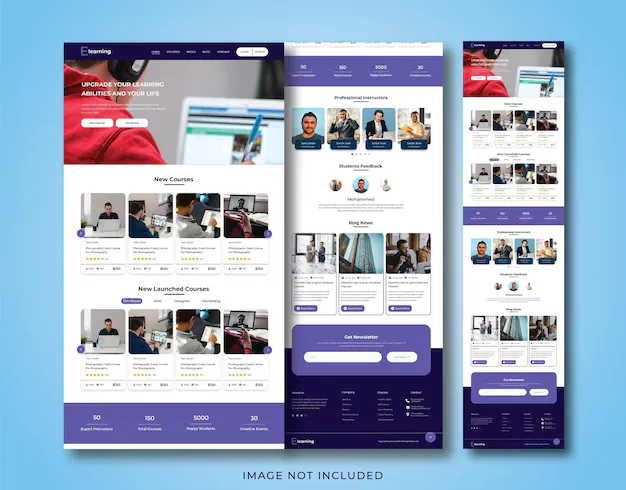
Before laying out any pages, define your website's single main goal: whether it's to collect leads through a contact form, sell products directly, or simply build credibility with prospective clients. This goal determines the page structure and call-to-action you use throughout the site.
The most common mistake is trying to chase all three goals at once on the same page, which just leaves visitors confused about what to do. Pick one priority, then align the entire site's content with it.
Step 2: Structure Your Pages Clearly
A clean page structure helps visitors — and search engines — quickly understand what your site is about. For most businesses, this structure is enough:
- Home — a quick summary of what you offer and to whom
- About Us — credibility, experience, and the team behind the business
- Services/Products — offering details, broken down by category if needed
- Testimonials/Portfolio — social proof that your business is credible
- Contact — the easiest way to reach you, don't bury it in nested menus
If your business is a company with multiple service lines, this same structure is also the foundation when you're looking to build a more formal, division-structured company website.
Step 3: Make Sure Every Page Has a Clear Call-to-Action
Every page should have one clear direction for action — a "Contact Us", "Request a Quote", or "View Services" button. A site without a clear CTA lets visitors arrive and leave without doing anything, even when they were genuinely interested.
A few principles for effective CTAs:
- One primary CTA per page — don't let it compete with other buttons that pull focus away
- Use active verbs ("Contact", "Free Consultation", "View Pricing") instead of passive phrases ("Click here")
- Place the CTA somewhere easily visible without much scrolling, especially on mobile
- Repeat the same CTA at the end of the page for visitors who read all the way down
Step 4: Optimize SEO Basics From Day One
SEO isn't an extra step you tack on later — the earlier you apply it, the faster your site gets found through organic search. A few basics that should be in place from day one:
- Use a clear page title (title tag) that includes keywords relevant to your business
- Make sure page load speed is fast enough, especially on mobile
- Write an engaging, informative meta description for every main page
- Use a logical heading structure (H1, H2, H3), not a random one
- Make sure every page has a descriptive, readable URL
If you want to understand the technical side behind this process — how pages get built, hosted, and optimized — it's worth first reading a short explainer on what web development is before diving into execution.
Building It Yourself or Hiring a Service?
There are two main paths to building your business website, and both are valid depending on your needs.
If your needs are relatively simple, budget is limited, and you have time to learn, you can start with our general how to build a website guide, or if it's your first time, our how to build your own website for beginners guide, which is more step-by-step. Businesses selling products directly can also check our dedicated guide on how to build an online store website.
But if this website will be your main channel for acquiring customers and you need polished results in design, speed, and SEO, using a website development service is usually far more time-efficient and delivers a better end result. This especially applies to small businesses that need a website development service for small businesses that gets up quickly and ready to sell, as well as larger companies that need a company profile website development service to build credibility with clients or investors.
Before choosing a service provider, it's worth reading how to choose a professional website development service so you know what criteria to check, and first getting a sense of the cost of building a business website in Indonesia so you can set a realistic budget.
An effective business website can always answer one question within the first 5 seconds: what does this business offer, and why should I care? If visitors need longer than that to find the answer, there's a good chance they'll leave before ever reaching out.
Frequently Asked Questions
What's the minimum number of pages for a business website? A minimum of 4-5 pages: Home, About, Services/Products, Testimonials (optional), and Contact is enough to get an effective business website started.
Does a business website need a blog? Not required, but it helps a lot with long-term SEO since it gives you more content that's discoverable through search, while reinforcing topics and keywords relevant to your business.
How long until a website starts bringing in customers? It varies — organic search traffic usually takes a few months, while traffic from ads or directly shared links can show results much faster.
What's the difference between building a business website and a company website? The principles are basically the same — clear page structure, a strong CTA, and solid SEO basics. The difference is usually just scale and formality of content: a company website tends to emphasize profile, legal standing, and business lines more, while a small business website can be more concise and go straight to the offer.
What's the most common mistake on business websites? Focusing too much on looks while forgetting to make sure prospective customers know exactly how to contact or buy from you.



Comments
Got a question or feedback? Leave a comment!